

Written by:
Ian Watkins
Mining Development in Africa: From Ancient Roots to a Global Future
Africa’s mining story is as old as civilization itself, yet as modern as the electric vehicle revolution. From the gold mines of Nubia to cobalt powering today’s batteries, the continent’s mineral wealth has shaped economies, geopolitics, and societies across centuries, our production director Ian Watkins narrates.
Africa stands at the crossroads of history and innovation, poised to redefine its role in global mining through sustainability, technology, and strategic partnerships.
Mining in Africa is not merely an industry; it is a prism through which the continent’s past, present, and future can be understood. The story begins with the gold of Nubia and the copper of ancient Central Africa, resources that sustained empires and fuelled trade across deserts and seas. It then moved through the colonial period, when diamonds from Kimberley and gold from the Witwatersrand became symbols of extraction and exploitation, enriching European capitals while leaving African communities dispossessed.
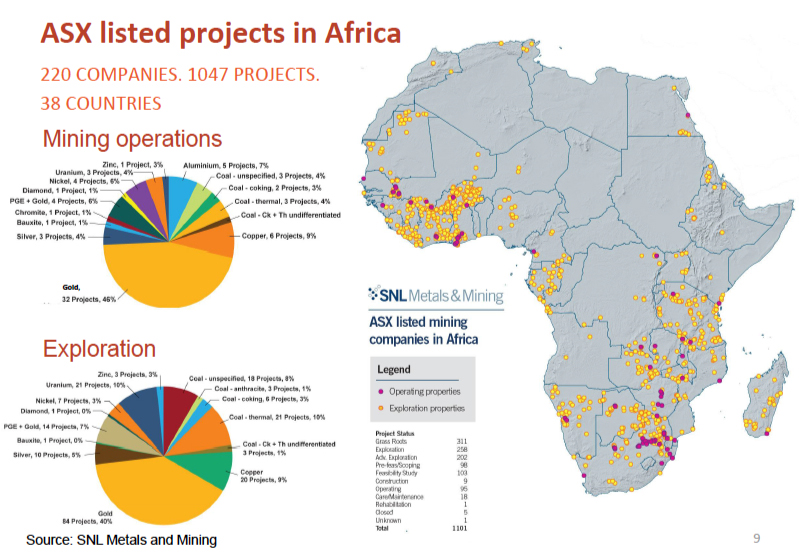
Independence brought the promise of sovereignty over resources, but governance challenges, fluctuating commodity prices, and infrastructure deficits often meant that the promise was only partially realized. Yet even in this uneven history, Botswana’s diamond-led development has demonstrated that resource wealth can be harnessed for national transformation.
By the early 2000s, Africa was swept into the global commodities boom, driven largely by China’s industrial rise. Copper from Zambia and the DRC, iron ore from Guinea, and coal from Mozambique and South Africa flowed into global markets, revitalizing economies and reshaping trade balances.
But this boom also exposed vulnerabilities, dependence on external demand, environmental degradation, and the persistence of artisanal mining outside formal frameworks. The lesson was clear—resource wealth could be a catalyst, but without governance, infrastructure, and community integration, it could also be a trap.
Today in 2026, the narrative has shifted decisively. The global energy transition has elevated Africa’s minerals from commodities to strategic assets. Cobalt, lithium, nickel, and rare earths are no longer peripheral—they are the backbone of electric vehicles, renewable energy storage, and advanced electronics. The DRC’s cobalt reserves, Zimbabwe’s lithium fields, and Tanzania’s rare earth projects are now central to global supply chains.
Africa is no longer just a supplier of raw materials; it is a fulcrum of geopolitical competition. Washington, Brussels, London and Beijing are all vying for partnerships, infrastructure deals, and long-term access to Africa’s mineral corridors. The continent’s resources are now levers of global power, and African governments are increasingly aware of their bargaining strength.
This transformation is accompanied by profound shifts in how mining is conducted. Sustainability has moved from rhetoric to requirement. Investors are demanding ESG compliance, and mining companies are integrating renewable energy into operations, recycling water, and committing to carbon reduction targets.
Technology is reshaping exploration and production, drones are mapping deposits with precision, AI is predicting geological patterns, and blockchain ensuring transparent supply chains. The African mining workforce is evolving too, with universities and vocational centers training geologists, engineers, and data scientists to meet the demands of a digitized industry. Gender inclusion initiatives are reshaping mining communities, and local talent is increasingly at the forefront of innovation.
Infrastructure remains both a challenge and an opportunity. Railways, ports, and power grids are being upgraded to support mining hubs, while regional collaborations are strengthening resource corridors. These investments are not just about moving minerals—they are about integrating mining into broader economic ecosystems.
Mining companies are investing in healthcare, education, and housing, shifting from extractive models to shared value approaches. Communities are no longer peripheral—they are central to the sustainability of mining operations.
The outlook is ambitious as Africa is poised to become a global battery hub, anchoring supply chains for electric vehicles and renewable energy. Governments are pushing for local beneficiation, insisting that minerals be processed and refined domestically to capture more value. Climate resilience will shape operations, as companies adapt to water scarcity and extreme weather. Governance reforms are expected to attract sustainable investment, while innovation tailored to African realities could position the continent as a leader in mining technologies that balance efficiency with environmental stewardship.
Yet risks remain. Political instability, infrastructure gaps, and community tensions are persistent challenges. The scramble for critical minerals could reproduce old patterns of exploitation if governance falters. But the momentum is undeniable. Africa’s mining sector is no longer defined solely by its past—it is actively shaping the future.
The continent has emerged as a critical player in the global energy transition, not just supplying minerals but influencing how they are mined, processed, and integrated into sustainable development.
The scramble for these resources is not simply about supply, it is about control. The United States and European Union are investing in partnerships to secure ethical, transparent supply chains, while China continues to deepen its entrenched presence through infrastructure deals and long-term contracts.
Africa, for once, holds the cards. Governments are increasingly aware that their minerals are bargaining chips in a global contest, and the push for local beneficiation reflects a determination to capture more value domestically.
Mining in Africa is thus more than an industry, it is a narrative of resilience and reinvention. From ancient gold routes to modern cobalt corridors, the continent has always been a source of global wealth. Today, it is also a source of global solutions. The world’s shift toward clean energy and advanced technology cannot succeed without Africa, and Africa’s mining sector is ready to ensure that this time, its resources fuel not just external prosperity, but continental transformation.