

Written by:
Zelda Williams
Africa’s Oil Renaissance: A Continent Asserting Control in a Divided Energy World
For decades, Africa’s oil economies were defined by asymmetry, resources flowed outward, value remained elsewhere, Our Oil & Gas Business Editor, Zelda Williams explains.
Africa is done waiting.
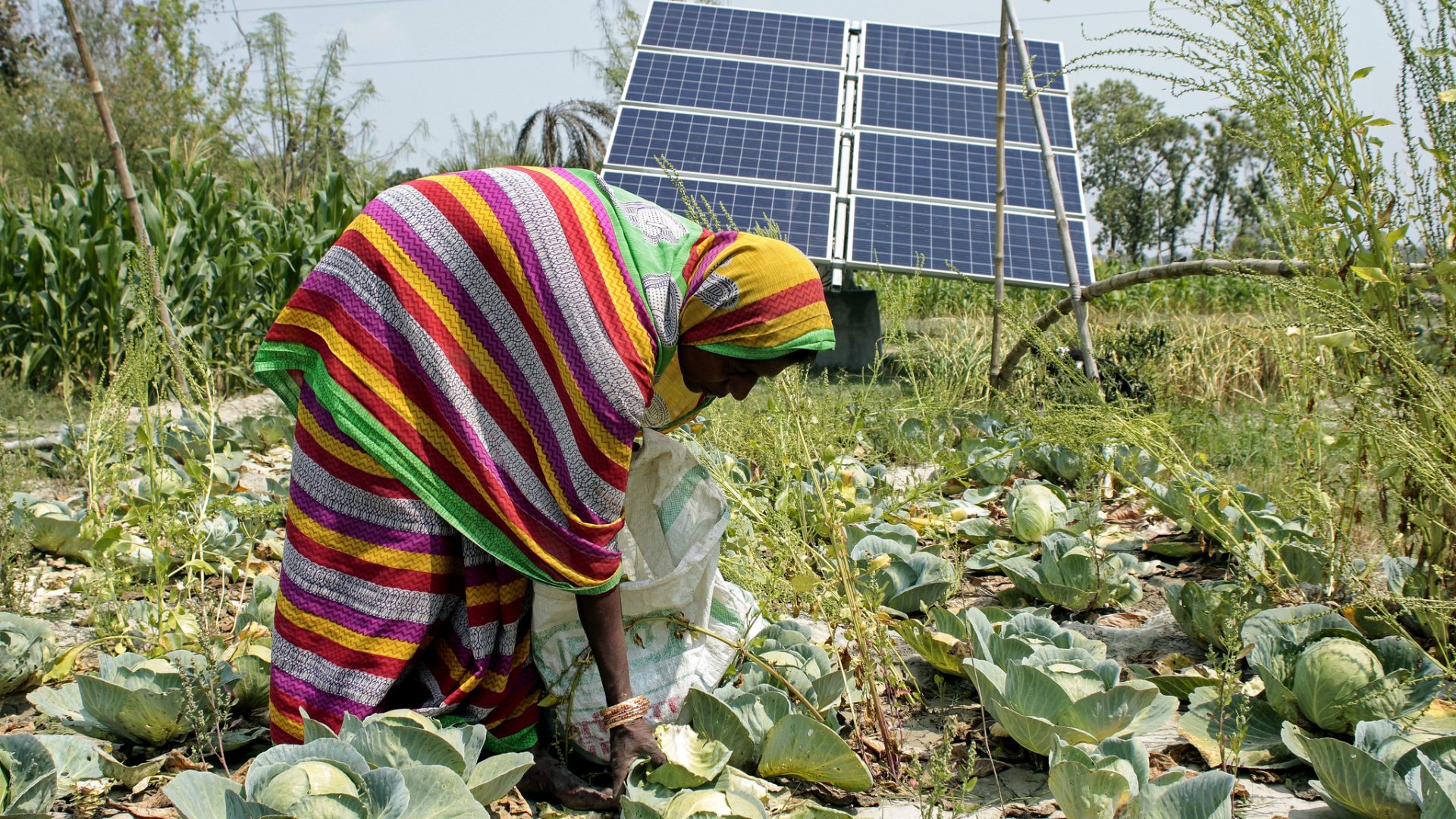
At a moment when the global North is recalibrating its energy priorities—pivoting toward renewables while quietly securing new fossil fuel supplies—Africa is making a more unapologetic calculation. For a continent where over 600 million people still lack access to electricity, the question is not whether to develop oil and gas resources, but how fast—and on whose terms.
The result is a quiet but consequential resurgence. From new offshore discoveries to billion-dollar infrastructure projects, Africa’s petroleum sector is not retreating in the face of the energy transition. It is reorganising, modernising, and, increasingly, asserting itself.
This is no longer just a story of extraction. It is a story of leverage.
The End of Passive Resource Politics
For decades, Africa’s oil economies were defined by asymmetry: resources flowed outward, value remained elsewhere. Crude was exported, refined products imported. Revenues rose and fell with global prices, while domestic industrial capacity stagnated.
That model is now under strain—not simply because it failed to deliver inclusive growth, but because African governments are actively dismantling it.
Across the continent, policymakers are tightening fiscal regimes, renegotiating contracts, and demanding greater local participation. The shift is subtle but significant: from resource custodians to strategic actors.
This recalibration is attracting capital. International oil companies, facing tighter regulations and political resistance in other regions, are returning to Africa with renewed interest. At the same time, indigenous firms are expanding their footprint, signalling a gradual rebalancing of ownership and expertise.

A New Energy Geography Emerges
Perhaps the most striking feature of Africa’s oil resurgence is not the scale of investment, but its geography.
The old map—dominated by West and North Africa—is being redrawn.
East Africa’s Moment
Uganda’s long-delayed oil ambitions are finally materialising. With production infrastructure nearing completion and an export pipeline linking its fields to the Indian Ocean, the country is poised to join the ranks of oil exporters.
This is more than a national milestone. It is a regional inflection point. East Africa, historically peripheral to global oil markets, is stepping into relevance. The implications are profound: new trade routes, new industrial corridors, and new geopolitical considerations.
Yet the real test will not be production volumes, but policy discipline. Uganda’s leaders face a narrow window to convert oil revenues into durable economic gains. Many have failed before them.
Namibia and the High-Stakes Promise of Discovery
Further south, Namibia has become the industry’s most closely watched frontier. A string of offshore discoveries in the Orange Basin has transformed the country’s prospects almost overnight.
The scale of potential reserves has drawn the attention of global majors, each eager to secure a foothold in what could become one of the decade’s most lucrative new oil provinces.
But with opportunity comes risk. Namibia’s challenge is not geological—it is institutional. The country must build the regulatory, fiscal, and governance frameworks required to manage a sector of immense complexity.
Done well, Namibia could become a model for late-stage entrants. Done poorly, it risks replicating the very dynamics Africa is trying to escape.
Nigeria’s Reckoning and Reinvention
No country embodies Africa’s oil paradox more vividly than Nigeria. For decades, it has been the continent’s largest producer, yet it has struggled with declining output, infrastructure sabotage, and the enduring contradiction of importing refined fuel.
Now, a structural shift is underway.
The expansion of domestic refining capacity marks one of the most consequential developments in Africa’s energy landscape. By reducing reliance on imports and positioning itself as a regional supplier of refined products, Nigeria is attempting to close a long-standing gap in its value chain.
This is not merely an economic adjustment—it is a strategic one. Control over refining translates into pricing power, supply security, and regional influence.
Yet Nigeria’s transformation is far from complete. Production challenges persist, and governance reforms remain uneven. The country’s success will depend on whether it can align its ambitions with consistent execution—a test it has historically struggled to pass.
Gas: Africa’s Pragmatic Bet
If oil is the backbone of Africa’s current energy strategy, natural gas is its hedge against the future.
In a global environment increasingly hostile to high-carbon fuels, gas offers a more politically and environmentally palatable alternative. It is abundant, versatile, and critical for power generation—particularly in countries where renewable capacity remains underdeveloped.
Mozambique’s LNG projects illustrate both the promise and the fragility of this strategy. Vast reserves have the potential to reshape the country’s economy, yet security concerns have delayed progress and raised questions about long-term viability.
Elsewhere, countries such as Angola, Senegal, and Mauritania are advancing gas developments with a dual objective: export revenue and domestic electrification.
This duality is key. Africa is not simply exporting energy; it is attempting to build it into the foundation of its development.
The Politics of Energy Transition
Africa’s oil resurgence cannot be understood in isolation from the global energy transition.
There is an inherent tension—one that is often framed in moral terms but is, at its core, economic. Developed nations, having industrialised on the back of fossil fuels, are now urging restraint. African nations, still in earlier stages of development, are pushing back.
The argument is straightforward: energy poverty is a more immediate threat than climate change.
This position is gaining traction. African leaders are increasingly vocal in international forums, insisting on a more equitable approach—one that recognises both historical responsibility and present-day realities.
At the same time, the financial landscape is shifting. Access to capital for oil and gas projects is becoming more constrained, forcing African countries to diversify funding sources and rethink project structures.
The result is a more complex, and arguably more strategic, energy environment—one where Africa must navigate competing pressures without losing sight of its priorities.
The Governance Imperative
If there is one factor that will determine the success or failure of Africa’s oil renaissance, it is governance.
The continent does not lack resources. It does not lack opportunity. What it has often lacked is the institutional capacity to manage both effectively.
There are signs of improvement. Sovereign wealth funds are being strengthened. Transparency initiatives are gaining ground. Regulatory frameworks are becoming more robust.
But progress is uneven, and the stakes are high.
Without disciplined revenue management, oil wealth can distort economies, entrench inequality, and fuel instability. With it, the same wealth can finance infrastructure, education, and industrialisation.
The difference lies not in the resource, but in its stewardship.
A Narrow Window of Opportunity
Timing matters. Africa’s oil resurgence is unfolding at a moment when global demand has not yet peaked, but the long-term trajectory is clear. The window for maximising hydrocarbon value is finite.
This creates urgency. Projects must move from discovery to production more efficiently. Revenues must be deployed more strategically. Economic diversification must accelerate—not as a future goal, but as a present necessity. In this sense, Africa’s oil strategy is as much about speed as it is about scale.
From Resource Wealth to Strategic Power
Africa’s oil renaissance is not guaranteed to succeed—but it is unmistakably different from what came before.
There is greater awareness of past failures, stronger emphasis on value addition, and a more assertive posture in global energy debates. Countries are no longer content to extract and export. They are seeking to refine, distribute, and negotiate from a position of strength.
This shift—from passive participation to strategic control—may prove to be the most important development of all.
In a fragmented energy world, where supply chains are tightening and geopolitical competition is intensifying, Africa’s resources are not just economic assets. They are instruments of influence.
The question is whether the continent can wield them effectively.
If it can, oil will not merely power Africa’s economies—it will help redefine its place in the world.