
The African mining equipment sector is entering a decisive phase. Growth across the continent is not simply expanding opportunity, it is fundamentally raising the performance, scale and efficiency standards required to remain competitive.
For mining operators, this shift turns equipment strategy into a long-term business decision rather than a routine capital upgrade.

Mark Peters, Business Development Manager, MMD Mineral Sizing Africa
In this interview, our Mining Editorial Director Anna-Marie Gabriel probed Mark Peters, Business Development Manager, MMD Mineral Sizing Africa, about his point of view.
Anna-Marie: What makes MMD’s mineral sizing technology unique compared to other solutions in the market?
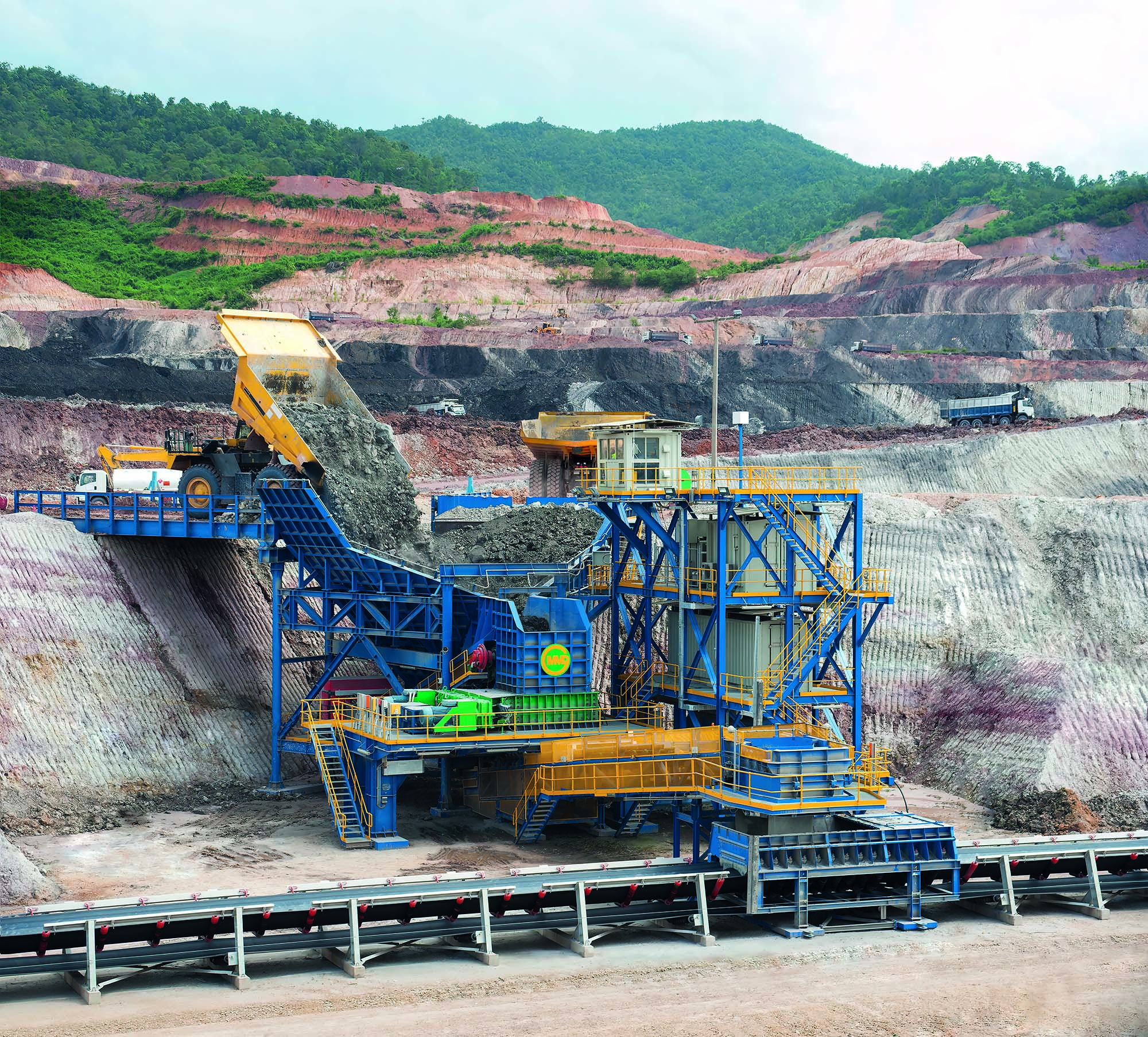
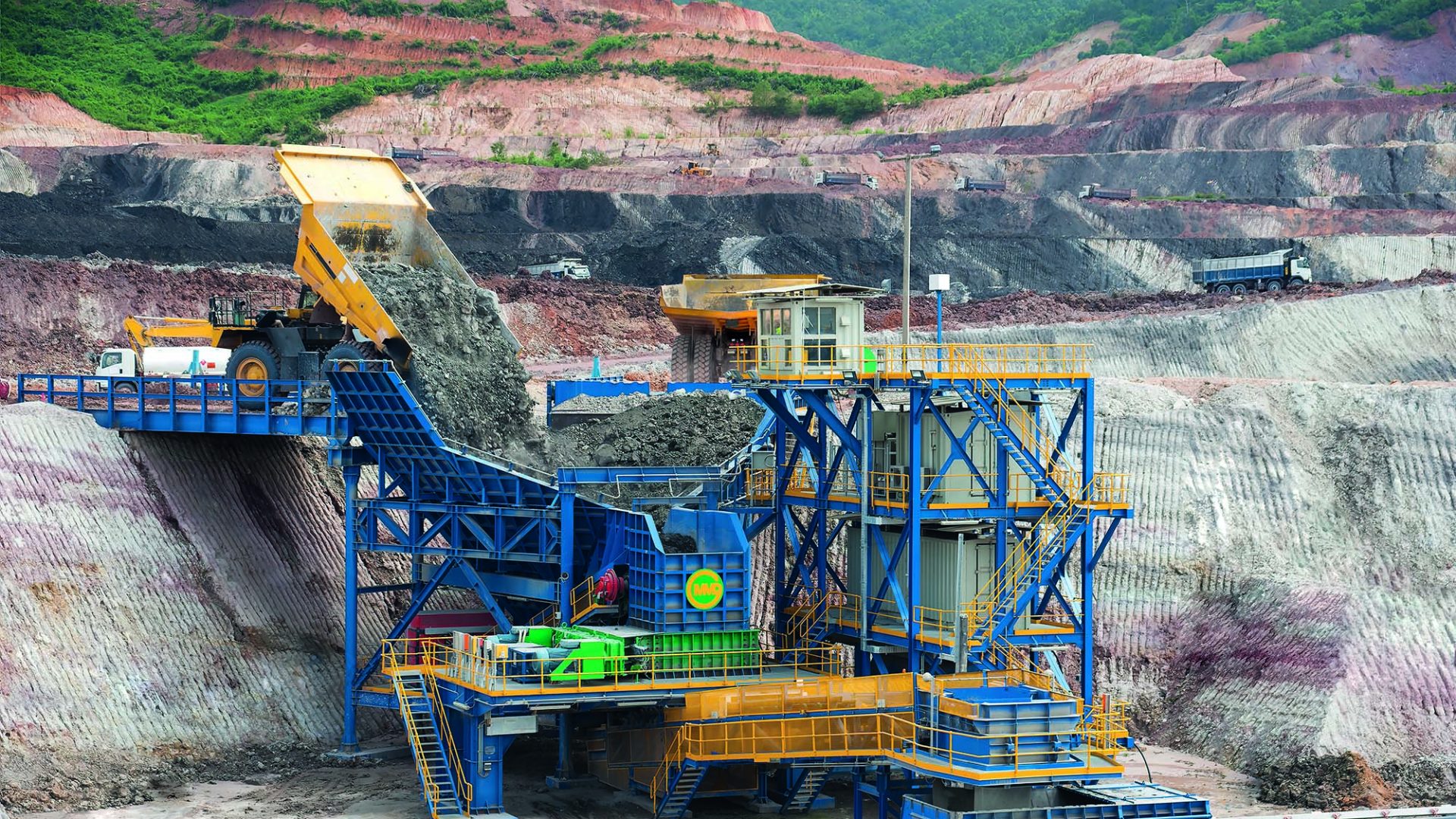
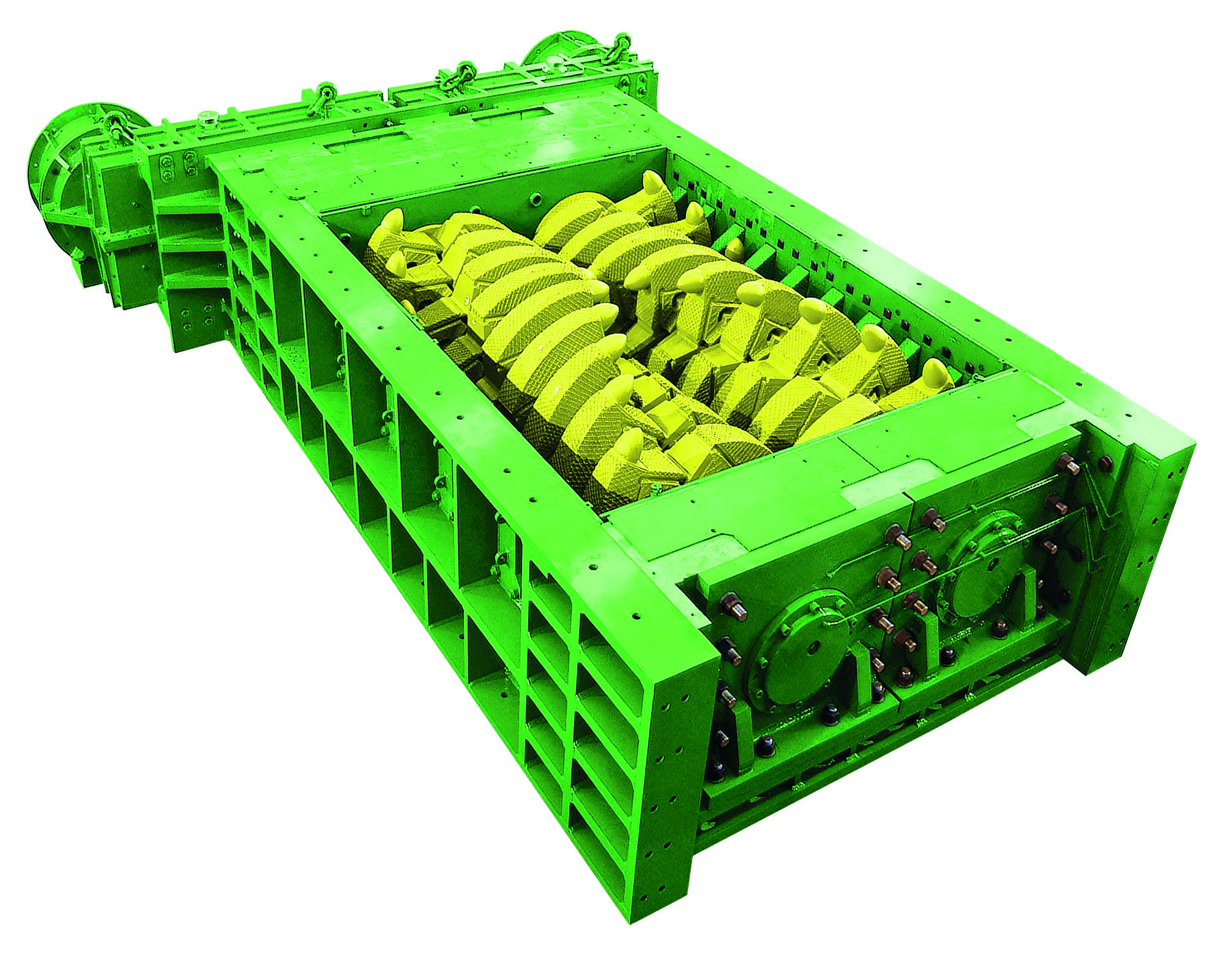
Mark: MMD’s mineral sizing technology is not simply a different crusher. It is a different philosophy of crushing. While conventional crushing systems rely on high-speed impact, MMD’s twin-shaft mineral sizers operate on controlled, low-speed, high-torque principles. This allows for selective breakage rather than indiscriminate pulverization. The outcome is predictable product sizing, lower fines generation, and reduced energy intensity.
From a strategic perspective, we don’t sell “equipment.” We sell certainty. In a world where operational volatility erodes margins, certainty becomes currency. In the language of behavioural economics, MMD reframes the problem. Instead of asking “How fast can we crush?”, we ask “How precisely can we engineer downstream value?” That subtle shift creates exponential impact across IPCC systems, materials handling, and processing efficiency. We aim to “move the conversation” away from capital cost and toward life-cycle value, reliability, and total cost of ownership.
Anna-Marie: Sustainability is a growing priority in mining. How does MMD integrate environmental responsibility into its operations and product design?
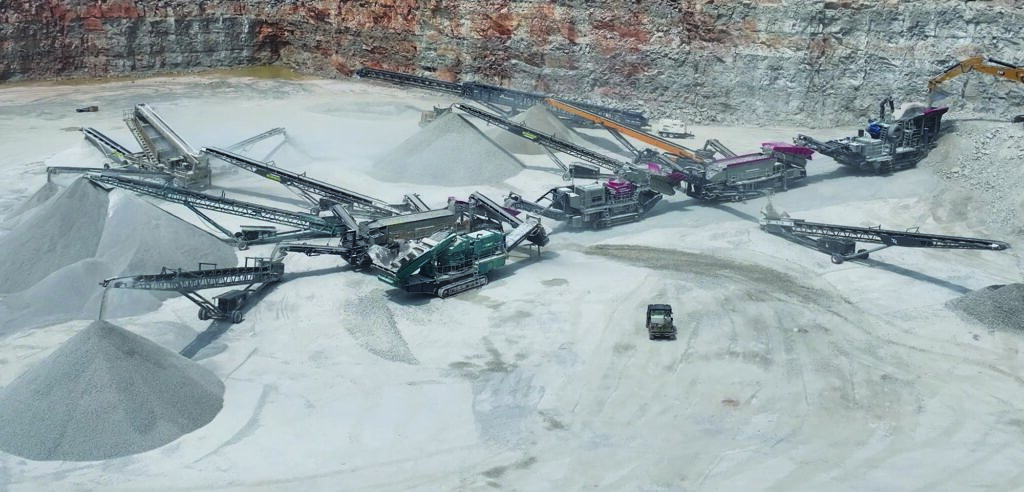
Mark: Sustainability is not an add-on. It is engineered into the torque curve. Our low-speed sizing technology reduces fines, dust, and energy consumption at source. In-pit crushing and conveying systems eliminate truck haulage, significantly lowering diesel usage and Scope 1 emissions. Hybrid and diesel-electric systems further reduce carbon intensity and fuel exposure.
According to the International Energy Agency (IEA, 2023), energy efficiency remains the single largest lever for emission reduction in heavy industry. MMD’s technology directly addresses this lever. We believe ESG is not about compliance. It is about competitiveness. When sustainability reduces cost per tonne and improves social license, it stops being a reporting metric and becomes a strategic advantage.
Anna-Marie: Innovation is often at the heart of progress. What recent advancements or developments are you most proud of?
Mark: The MMD–Terex Magna partnership represents a pivotal evolution. We have effectively removed the historical trade-off between throughput and flexibility.
Additionally, advances in modular IPCC systems and diesel-electric hybrid drives allow mines to scale progressively rather than committing to irreversible capital structures. In strategic terms, we are moving from selling machines to offering adaptive ecosystems. In volatile markets, optionality is power.
Anna-Marie: What advice would you give to mining companies seeking to modernize their operations and improve efficiency?
Mark: Modernization is not digitization alone. It is redesigning flows. We advise operators to rethink material handling holistically. Start upstream. Reduce rehandling. Minimize haulage. Integrate crushing and conveying earlier in the pit life cycle. McKinsey (2022) notes that mining productivity gains are increasingly driven by system optimization rather than isolated equipment upgrades. The question we often pose is: “How will your current design perform when commodity prices soften?” Equipment choices should reduce downside risk, not amplify it.
Anna-Marie: The African mining equipment sector is projected to reach $3.84 billion by 2030. How do you see this growth shaping the industry, and what role will MMD play in it?
Mark: We expect increased sophistication in procurement decisions. Capital allocation will favour: Lower total cost of ownership, ESG alignment, High-throughput reliability, Modular scalability. MMD’s role will be as a systems architect, enabling high-capacity operations while reducing operational volatility.
Anna-Marie: South Africa’s mining equipment market is forecast to grow at a faster rate than the continental average. What factors are driving this, and how is MMD positioning itself to meet demand there?
Mark: South Africa benefits from established mining infrastructure, deep technical skills base and energy transition mineral exposure
We are strengthening service networks and aligning with large-scale operations requiring high-throughput, reliable sizing solutions.
Anna-Marie: Mines are moving towards larger-scale extraction to remain viable. How does MMD’s technology address the need for higher throughputs and reliability?
Mark: Higher throughputs demand reliability at scale. MMD’s mineral sizers are engineered for large rock sizes, high torque capacity, and robust wear components. Predictable fragmentation reduces downstream bottlenecks and improves plant stability. Throughput without reliability is simply amplified risk. We engineer both.
Anna-Marie: Traditional mobile equipment has throughput limitations. Could you explain how the MMD–Terex Magna partnership is helping miners overcome these constraints?
Mark: Traditional mobile crushers have throughput ceilings due to design limitations.
By expanding our product offering beyond mineral sizers with Magna’s high-capacity mobile platforms, we deliver: Increased throughput into more diverse minerologies, reduced fines, faster deployment, lower capital commitment, decreased operational cost, in summary, flexibility becomes strategic insurance.
Anna-Marie: African mining operators often face volatility, regulatory shifts, and infrastructure challenges. How does mobile equipment reduce capital risk compared to permanent installations?
Mark: Permanent installations assume long mine life certainty.
Mobile solutions preserve strategic agility. They allow operators to respond to grade variability, regulatory shifts, and commodity cycles without stranded capital. Optionality reduces downside exposure.
Anna-Marie: ESG standards are becoming a competitive differentiator. How do MMD’s diesel-electric hybrid units help African operators align with global environmental benchmarks?
Mark: Hybrid units reduce fuel consumption, emissions, and noise. They align operators with global ESG benchmarks and investor expectations. According to the World Economic Forum (2023), ESG performance increasingly influences access to capital. Lower emissions also mean lower operating cost volatility. Sustainability and profitability are converging.
Anna-Marie: The energy transition is driving demand for critical minerals like copper, cobalt, and PGMs. How is MMD preparing to support African miners in meeting this global demand?
Mark: Critical minerals such as copper, cobalt, lithium, and PGMs require efficient bulk handling. MMD & Magna technology enables efficient primary sizing, reduced waste and higher throughput for expanding demand.
As the World Bank (2020) highlights, mineral demand for clean energy technologies may increase by up to 500% in certain categories. Supporting this responsibly is central to our strategic roadmap.
Anna-Marie: What are MMD’s growth plans for Africa over the next five years?
Mark: Africa represents not just a growth market but a strategic frontier.
Our focus includes expanding regional technical support capabilities, strengthening partnerships such as Terex Magna and our clients, increasing local manufacturing and service footprints, and supporting critical mineral extraction projects.
We see growth not as territorial expansion but as ecosystem development. Long-term presence builds trust capital, and trust capital wins projects.
Anna-Marie: Looking ahead, how do you see equipment selection influencing competitive advantage in African mining over the next decade?
Mark: Over the next decade, equipment selection will determine, cost per tonne, carbon intensity, operational flexibility and capital resilience
In uncertain markets, resilience beats optimization. The companies that win will not necessarily have the biggest fleets. They will have the most adaptable systems.
The goal is not to be the biggest OEM in Africa. It is to be the most trusted, efficient, and future-ready. And that is precisely where MMD positions itself.